If you want a Peninsula city that feels tucked into the hills without giving up daily convenience, Belmont deserves a close look. You may be trying to balance scenery, access, errands, and the practical realities of homeownership all at once. The good news is that Belmont offers a blend of hillside character, open space, and useful retail and transit connections that can support real everyday living. Let’s dive in.
Belmont’s Hillside Identity
Belmont is often defined by its wooded hills, Bay views, and preserved open space. The city describes itself as a quiet residential community between San Francisco and San Jose, with planning priorities centered on preserving existing neighborhoods, open space, and small-town character.
That hillside setting shapes more than the view from your window. In Belmont, the terrain can affect how you drive, walk, renovate, and think about long-term property use. For many buyers, that is part of the appeal, but it is also part of the practical decision-making.
Hillsides Bring Character and Constraints
If you are considering a home in areas like the San Juan Hills or Western Hills, it helps to understand that Belmont flags several real-world factors tied to hillside properties. These can include steep slopes, geological hazards, limited access and infrastructure, environmental protections, and zoning or General Plan constraints.
In simple terms, a hillside lot may offer privacy, views, or a striking setting, but it may also come with more complexity than a flatter parcel. If you are thinking about future additions, major landscaping, or site changes, those property-specific details matter early.
Design in Belmont Follows the Site
Belmont’s residential design guidelines do not push one architectural style over another. Instead, the city focuses on compatibility with the site and surroundings, while also emphasizing public views, ridgelines, bulk, grading, hardscape, and landscaping.
That approach helps explain why Belmont can feel visually cohesive without looking overly uniform. You may see a mix of home types and eras, but the larger goal is to fit new work into the landscape and neighborhood context in a measured way.
Outdoor Access Is Part of Daily Life
In Belmont, parks and open space are not separate from the rhythm of the city. They are woven into how many residents spend a morning, break up the day, or head outside after work.
For buyers who value easy access to trails, shade, and hillside views, that can be a meaningful lifestyle advantage. Even if you are not planning weekend adventures every week, the outdoor network still shapes the feel of everyday life.
Twin Pines Park Adds a Civic Green Space
Twin Pines Park is a 19-acre ravine park near Ralston Avenue and El Camino Real. It includes a creek, picnic areas, shade, short trails, and city facilities such as City Hall and Parks & Recreation.
That makes it more than a traditional neighborhood park. It functions as both green space and a civic gathering point, which gives this part of Belmont a practical and connected feel.
Waterdog Lake Supports Trail-Oriented Living
Waterdog Lake & Open Space offers multiple trailheads, sunrise-to-sunset access, and hiking and biking trails. City materials also note trail access and Bay views, reinforcing Belmont’s connection to the outdoors.
If you picture daily life here, this matters. You are not driving far to find open space, because in many cases the trail network is already part of the local landscape.
Regional Trail Connections Expand the Lifestyle
Belmont’s trail and bike connections extend beyond the city core. The city points to a Ralston Avenue bike route leading to the Bay Trail, while the county’s Ralston Bike Trail connects Belmont with Crystal Springs Trail.
Nearby, the Crystal Springs Cross Country Course overlooks the reservoir, the Bay, and the San Francisco skyline. Taken together, these connections suggest that outdoor recreation in Belmont is not isolated to one park or one hillside. It is part of a broader Peninsula network.
Everyday Errands Stay Grounded in Key Hubs
One of Belmont’s strengths is that it combines a residential hillside setting with practical retail clusters. That matters if you want a calmer home environment but still need simple access to dining, shopping, and routine errands.
Rather than spreading activity evenly across the city, Belmont’s conveniences tend to gather in a few useful nodes. For many residents, that can make daily planning feel more straightforward.
Belmont Village Is Evolving as a Town Center
The downtown village around the Caltrain station is treated as a Priority Development Area because of its transit access. City planning documents describe the Village as a place for new stores, restaurants, public space, and a more active town center.
That tells you something important about how Belmont is growing. Economic activity is being directed toward the Village and the El Camino Real corridor, while established residential neighborhoods are expected to change less.
Carlmont Village Adds Practical Convenience
Carlmont Village Shopping Center, located at 1049 Alameda de las Pulgas, states that it has more than 45 shops and restaurants. For day-to-day living, that makes it one of the clearest retail anchors in Belmont.
If you are the kind of buyer who thinks about where groceries, coffee, casual meals, and basic services fit into your week, this retail concentration matters. It supports a lifestyle that is residential and scenic without feeling disconnected.
Transit and Commute Options Matter Here
Belmont’s location between San Francisco and San Jose has long been part of its appeal. What makes the city especially interesting is that transit and bike access are more integrated into the community than you might expect from a hillside setting.
If commute flexibility matters to you, Belmont offers more than one way to think about getting around. That can be especially useful for households balancing office days, school runs, and regional travel.
Caltrain Anchors Regional Access
Belmont Caltrain Station is located at 995 El Camino Real and is served by Caltrain and SamTrans. 511 also lists the Belmont-Hillsdale Shuttle as a connection.
For some residents, that creates a workable link between local living and regional mobility. It also reinforces why the area around the station is such a central part of Belmont’s planning future.
Bike Support Complements Rail Use
Caltrain’s station information shows bike parking at Belmont. On its own, that may sound like a small detail, but it supports the idea of a mixed rail-and-bike commute pattern.
Belmont’s General Plan also emphasizes complete streets, walking, biking, transit use, and robust transit service. Key corridor improvements are focused on Ralston Avenue, El Camino Real, and Alameda de las Pulgas.
What the Housing Mix Feels Like
Belmont’s housing stock is varied, but it is still led by detached homes. According to the city’s 2023 to 2031 Housing Element, the 2020 housing stock was 58.0% single-family detached, 6.0% single-family attached, 3.1% small multifamily, and 32.9% larger multifamily.
That mix gives Belmont a broader range of housing options than some buyers may expect at first glance. Still, detached homes remain the largest share, which supports the city’s established residential identity.
Much of Belmont Reflects Mid-Century Growth
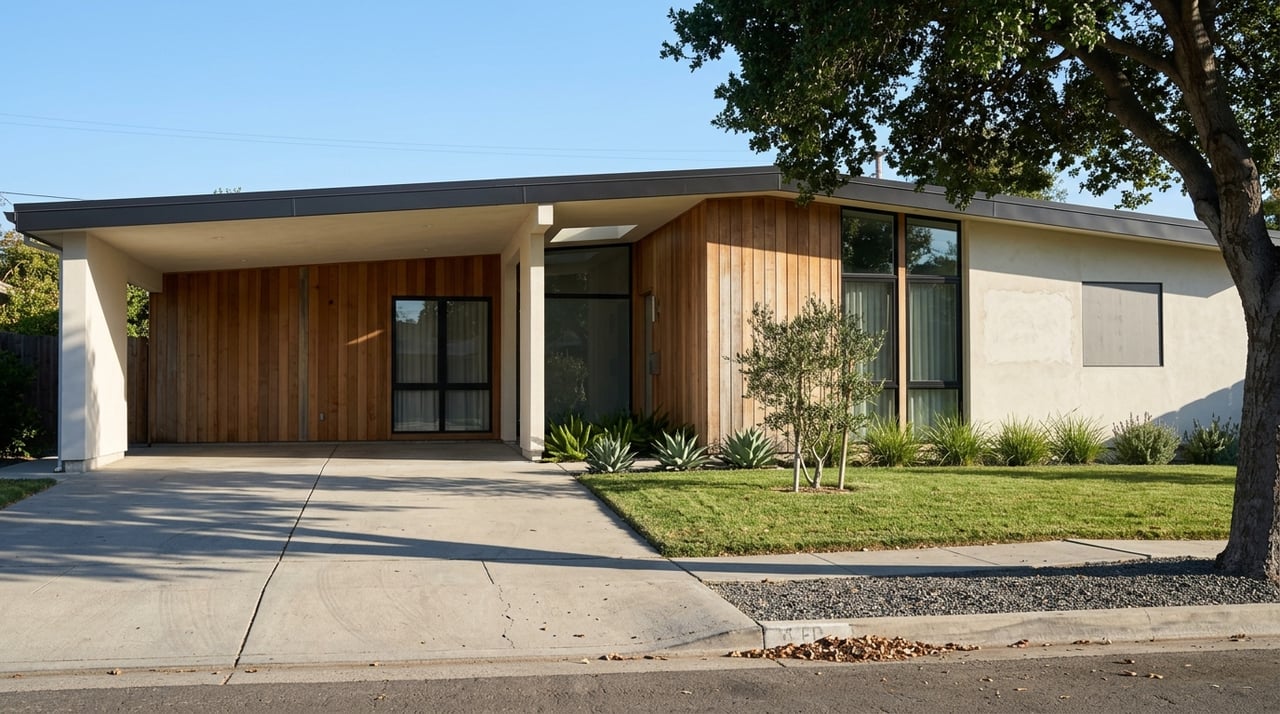
The city reports that the largest share of homes was built from 1960 to 1979. As an everyday visual impression, that often reads more like late-mid-century or postwar suburban fabric than a uniformly historic or newly built cityscape.
For buyers, this can mean you may see a meaningful range in condition, updates, and lot characteristics from one property to the next. It also helps explain why thoughtful remodeling and site-sensitive improvements can matter so much here.
Hillside Homes Need a Different Lens
In Belmont, evaluating a home is not just about square footage or finishes. On hillside parcels especially, slope, access, and infrastructure can materially affect what can be added or built in the future.
That is one reason local guidance matters. If you are comparing properties with renovation potential, view orientation, grading needs, or expansion goals, it helps to assess the home as both a residence and a site.
Why Belmont Appeals to So Many Buyers
Belmont can work for buyers who want greenery and relief from busier commercial districts, but who still need access to shopping, transit, and Peninsula connectivity. It offers a residential environment shaped by hills and open space, while keeping everyday functions within reach.
That balance is not always easy to find. In Belmont, the appeal is often less about one headline feature and more about how the pieces fit together: trails, views, established neighborhoods, practical errand hubs, and useful regional access.
If you are weighing Belmont against other Peninsula communities, pay attention to how you want your days to feel. A city can look great on paper, but the right fit usually comes down to rhythm, convenience, and the type of setting you want to come home to.
When you want help evaluating Belmont homes through both a lifestyle and property-value lens, Mariana Pappalardo can help you navigate the details with clarity and local insight.
FAQs
What makes Belmont’s hillside living different from other Peninsula cities?
- Belmont’s identity is closely tied to wooded hills, Bay views, and preserved open space, and the city notes that some hillside areas may involve steep slopes, limited access, environmental protections, and development constraints.
Where do Belmont residents usually handle shopping and errands?
- Two of the clearest retail hubs are Belmont Village around the Caltrain station and Carlmont Village, which has more than 45 shops and restaurants.
Is Belmont a good fit if you want outdoor access?
- Belmont strongly reflects an outdoor lifestyle, with places like Twin Pines Park, Waterdog Lake & Open Space, and bike and trail connections that extend beyond the city.
How does transit work in Belmont for Peninsula commuters?
- Belmont Caltrain Station is served by Caltrain and SamTrans, 511 lists the Belmont-Hillsdale Shuttle, and station bike parking supports combined rail-and-bike commuting.
What kinds of homes are most common in Belmont?
- The city’s housing stock is led by single-family detached homes at 58.0%, with additional single-family attached, small multifamily, and larger multifamily housing in the mix.
What should buyers know about remodeling a Belmont hillside property?
- Belmont notes that slope, access, infrastructure, environmental protections, and zoning or General Plan constraints can affect what may be added or built on hillside parcels.