Looking for a place where luxury feels grounded instead of flashy? Woodside stands apart on the Peninsula because estate living here is shaped as much by land, trails, and stewardship as it is by square footage. If you are drawn to private homesites, equestrian access, and a quieter kind of prestige, this guide will help you understand what makes Woodside unique and what to expect as a buyer or owner. Let’s dive in.
Why Woodside Feels Different
Woodside is a small incorporated town in San Mateo County with an estimated 2024 population of 5,123 spread across 11.47 square miles. The setting is defined by rolling woodlands, oaks, grasslands, and redwood forest, and the housing profile is overwhelmingly residential in character, with about 95% of homes identified as single-family detached in the town’s 2020 housing profile.
That physical setting shapes the lifestyle. Woodside is not a conventional subdivision pattern with tightly packed homes and highly visible streetscapes. It reads more like a rural residential community where houses sit into the land, trails connect across and beyond neighborhoods, and privacy often comes from topography, trees, and deep setbacks rather than walls or gates.
Estate Living Has Deep Roots
Woodside’s estate identity is not a recent branding story. Town history says prosperous San Francisco families began creating country estates here in the 1880s, which helped establish the large-parcel, retreat-like character that still defines the market today.
That legacy also connects directly to the equestrian culture. The town’s general-plan history notes that the current horse trail system began in 1931, and that trail tradition continues to influence how land is used, preserved, and experienced.
What Defines a Woodside Estate
In Woodside, estate living is usually more understated than overt. The town’s residential design guidelines describe many homes as being on large lots, often from 1 to 5 acres, with an emphasis on respecting the natural setting rather than dominating it.
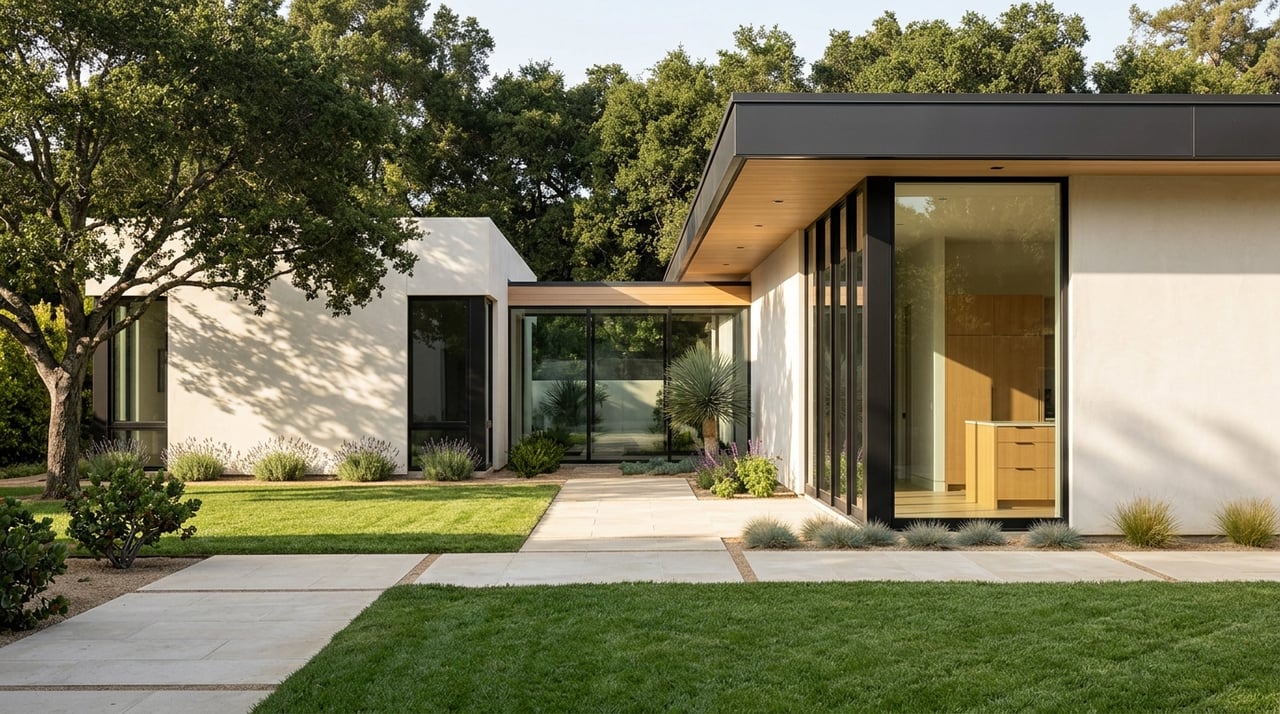
That creates a very specific visual language. Instead of dramatic roadside presentation, you are more likely to find long driveways, wooded buffers, screened garages, and homes that feel set back into the landscape. Privacy often comes from thoughtful siting and landscape screening, not just size alone.
Common Site Features
Many estate properties in Woodside share a similar planning approach because of the town’s design standards. Features you may commonly see include:
- Long or screened driveways
- Larger setbacks for larger homes
- Limited visibility from the road
- Garages and parking areas screened from view
- Detached accessory structures
- Barns or stables on horse-capable sites
- Landscape buffers that preserve a natural feel
The result is a quiet-luxury aesthetic. The town favors natural materials, wildlife-friendly and open fencing, understated gates, and limited exterior lighting, while discouraging solid walls and elaborate entries.
Outdoor Amenities Take a Back Seat
Woodside does allow outdoor amenities, but the design approach is clear. Pools and sport courts are expected to remain secondary features rather than become the visual centerpiece of the property.
For you as a buyer or seller, that matters. A Woodside estate often derives value from site placement, natural character, and overall cohesion with the land, not just from adding more visible amenities.
Equestrian Living Is Part of the Town’s Fabric
In many luxury markets, horse facilities are a niche feature. In Woodside, they are woven into the identity of the town. Woodside’s own horse resources state that many residents keep horses or own horse-capable property, and the Livestock and Equestrian Heritage Committee supports that lifestyle through its handbook and resources.
This is one reason Woodside appeals to buyers who want more than a large home. You may be looking for a property that supports day-to-day horse keeping, easy trail access, or a broader land-based lifestyle that feels difficult to find elsewhere on the Peninsula.
Horse-Capable Property Can Include More Than a Barn
The local equestrian toolkit goes beyond a simple stable. Town materials reference features such as:
- Turnouts
- Paddocks
- Round pens
- Arenas
- Extended stalls
- Corrals
- Access to local semi-private equestrian facilities
If you are evaluating a property for horse use, it helps to think in terms of the full setup and how the site functions. A home may have the land area and zoning support for equestrian improvements, but the layout, access, and review process still matter.
Horse Keeping Requires Permits
Horse ownership in Woodside is supported, but it is also regulated. The town requires a Stable Permit for both commercial and private use, and no horse may be kept for more than 30 consecutive days without one.
The permit is annual, includes staff review, and also involves an inspection by the Livestock and Equestrian Heritage Committee. If you are buying a horse property, this is an important practical detail to understand early in the process.
Trails Are a Major Part of Daily Life
One of Woodside’s biggest lifestyle advantages is its trail network. The town’s General Plan identifies public equestrian trails and notes that the Trails Committee works to maintain and expand the network, with the goal of connecting neighborhoods to parks and open space preserves.
That means trail access is not just a bonus feature. In many parts of Woodside, it is part of how the town functions and one reason the area feels distinct from a standard suburban neighborhood pattern.
Access Extends Beyond Town Limits
The broader open space network adds even more value to equestrian and outdoor living here. Midpeninsula Regional Open Space District reports that its preserves offer nearly 250 miles of trails for horseback riding, and nearby preserves above Woodside include Thornewood Preserve and Teague Hill Preserve.
Woodside history also notes that Huddart Park and Wunderlich Park border the town and expand trail access between public and private lands. For riders and outdoor-minded homeowners, that wider network is a meaningful part of the Woodside experience.
Building and Remodeling in Woodside
For buyers considering a fixer, sellers preparing a property for market, or owners planning a long-term upgrade, Woodside has a review environment that deserves careful attention. Significant remodels and new construction are subject to review by the Architectural and Site Review Board, which looks at community character, site planning, building design, and landscape elements.
This process is important because Woodside places strong value on site-sensitive design. Projects that respond to the land and rural character are aligned with town goals, but they also face more aesthetic and environmental scrutiny than you might expect in a more conventional suburban market.
What the Town Encourages
The town’s design and zoning framework points toward a fairly consistent approach. In general, Woodside favors:
- Smaller footprints on hillsides
- Preservation of natural site features
- Compatibility between accessory structures and the main house
- Simple, rural character for barns and utilitarian buildings
- Minimal visual impact from roads and neighboring viewpoints
RR zoning explicitly contemplates features such as covered equestrian arenas, barns, stables, garages, ADUs, and other accessory structures. On steeper parcels, the standards also require preservation of some areas in a more natural state.
Why Design Strategy Matters
In a market like Woodside, design strategy is not just about aesthetics. It affects feasibility, approval pathways, long-term usability, and resale appeal.
That is especially relevant if you are preparing a home for sale or considering improvements before listing. A thoughtful update that respects Woodside’s site-sensitive standards can support market positioning, while a plan that ignores the land or overstates the architecture may work against local expectations.
Ownership Here Includes Stewardship
Woodside estate ownership comes with responsibilities as well as rewards. Town materials point to preservation of creek corridors, key landscape features, and habitat through natural-state requirements on some larger or steeper parcels, as well as programs like the Backyard Habitat Program and the Defensible Space and Home Hardening Matching Fund Program.
For many owners, this becomes part of the appeal. Caring for the land is not separate from the value of the property. It is part of what helps preserve the town’s character over time.
Fire Safety Is Part of Planning
Because of the natural landscape, fire readiness is an important part of ownership. The town notes that invasive plants can increase fire danger, and it also points property owners toward practices such as water efficiency, reuse of materials, electrification, and low-impact landscaping as part of modern stewardship.
For horse owners, emergency planning carries an added layer. Woodside advises prearranged horse relocation routes for wildfire evacuation and offers green reflective horse signs for horse properties.
What Buyers Should Look For
If you are searching for an estate or equestrian property in Woodside, it helps to look past headline details and focus on how the property actually lives. Size matters, but so do trail relationships, privacy from siting, permit needs, land stewardship demands, and the suitability of accessory structures.
A smart evaluation may include questions like these:
- How private is the home from the road and neighboring parcels?
- Does the site layout support equestrian use if that is a priority?
- Are there existing barns, stables, paddocks, or arenas?
- What permits may be required for intended horse use?
- How much of the land may be affected by natural-state preservation or hillside constraints?
- How do trails, parks, and open space connect to the property’s location?
- If you plan to remodel, how might the design review process shape your options?
What Sellers Should Know
If you are selling in Woodside, your home may deserve a more nuanced positioning strategy than it would in another luxury market. Buyers are often responding to the full estate composition, including siting, privacy, landscape character, accessory structures, and how naturally the property fits its setting.
That makes preparation especially important. The right pre-sale improvements, design choices, and marketing story can help buyers understand not just what the home includes, but why it is compelling in Woodside specifically.
For estates, horse properties, and design-sensitive homes, presentation should clarify the lifestyle behind the asset. That may include emphasizing discreet arrival, usable land, relationship to trails and open space, and the quality of any barns, detached structures, or site planning decisions.
If you are weighing a sale, a strategic renovation and marketing plan can make a meaningful difference in both buyer perception and overall outcome. For tailored guidance on preparing, positioning, or finding a Woodside estate or equestrian property, connect with Mariana Pappalardo.
FAQs
What makes Woodside different from other Peninsula luxury markets?
- Woodside stands out for its rural residential setting, large lots, equestrian culture, trail network, and design rules that favor privacy, natural materials, and homes that blend into the land.
Can you keep horses on a Woodside property?
- Many Woodside properties are horse-capable, but horse keeping is regulated and the town requires a Stable Permit if a horse is kept for more than 30 consecutive days.
What features are common in a Woodside estate property?
- Common features include large lots, long driveways, wooded buffers, screened garages, detached accessory structures, barns or stables, and landscape screening that limits visibility from the road.
Are there equestrian trails in and around Woodside?
- Yes. The town identifies public equestrian trails in its General Plan, and nearby open space and parks expand access to a larger regional trail network.
What should you know before remodeling a home in Woodside?
- Significant remodels and new construction are reviewed for site planning, building design, landscape elements, and community character, so project strategy should account for design and environmental review early.
What should buyers evaluate in a Woodside equestrian property?
- Buyers should review site layout, existing horse facilities, trail access, permit requirements, privacy, natural-state constraints on the land, and how any future improvements may fit the town’s standards.