What kind of Palo Alto home feels right for you: a character-filled bungalow with original details, or a clean-lined modern home built for today’s lifestyle? In a market where home values and ownership costs are already high, that choice is about more than taste alone. If you are weighing historic charm against modern minimalism in Palo Alto, understanding design, maintenance, renovation limits, and long-term ownership can help you decide with more confidence. Let’s dive in.
Palo Alto offers both styles
Palo Alto is not a one-style housing market. Its housing stock reflects different eras of development, from early bungalows and cottages to midcentury Eichler homes and newer contemporary builds.
The city’s Historic Inventory began in 1979 and originally included about 500 properties, mostly in and around the older core of the city. Local historic districts include Professorville and Ramona Street, which shows how certain parts of Palo Alto carry a stronger preservation context than others.
That matters when you shop for a home here. A house may look old and charming without being formally historic, while another property may come with more review considerations if you plan major exterior changes.
Historic charm in Palo Alto
Historic charm in Palo Alto can mean different things depending on the home’s era. For some buyers, it means an early bungalow or square cottage. For others, it means the distinctly midcentury character of an Eichler.
Early bungalows and cottages
Palo Alto’s early bungalows and square cottages generally date to the city’s early development, roughly 1890 to 1910. These homes were often low, one-story or one-and-one-half-story wood-frame houses with simple roof forms, porches, rectilinear plans, and modest ornamentation.
If you are drawn to these homes, you are often choosing period character and a more traditional spatial feel. You may also be choosing a home where exterior changes require more thought, especially if the property has been designated or may trigger a historic review.
Eichlers and midcentury appeal
Eichler homes bring a different version of historic charm. Palo Alto guidance describes them as mostly one-story, post-and-beam homes on concrete slabs with horizontal massing, clean lines, flexible interiors, and large expanses of glass.
For many buyers, that design still feels fresh today. The indoor-outdoor connection, simple geometry, and open feel line up naturally with the modern California lifestyle many people want in Palo Alto.
What historic homes ask of you
Older homes can be rewarding, but they often ask more from you as an owner. In Palo Alto’s price range, that is an important part of the decision.
The Census Bureau reports a median owner-occupied value of more than $2,000,000 and median monthly owner costs with a mortgage of more than $4,000. In a market like that, even moderate maintenance or renovation work can have a meaningful effect on your budget.
Palo Alto’s Eichler guidance highlights common concerns that also reflect the broader reality of many older homes. These can include flat roofs prone to leaks, foundations without crawl spaces, single-pane glass, limited insulation, and aging materials or systems that need ongoing maintenance or eventual replacement.
That does not make an older home a poor choice. It simply means you should go in with a clear plan for stewardship, comfort upgrades, and contingency funds.
Modern minimalism in Palo Alto
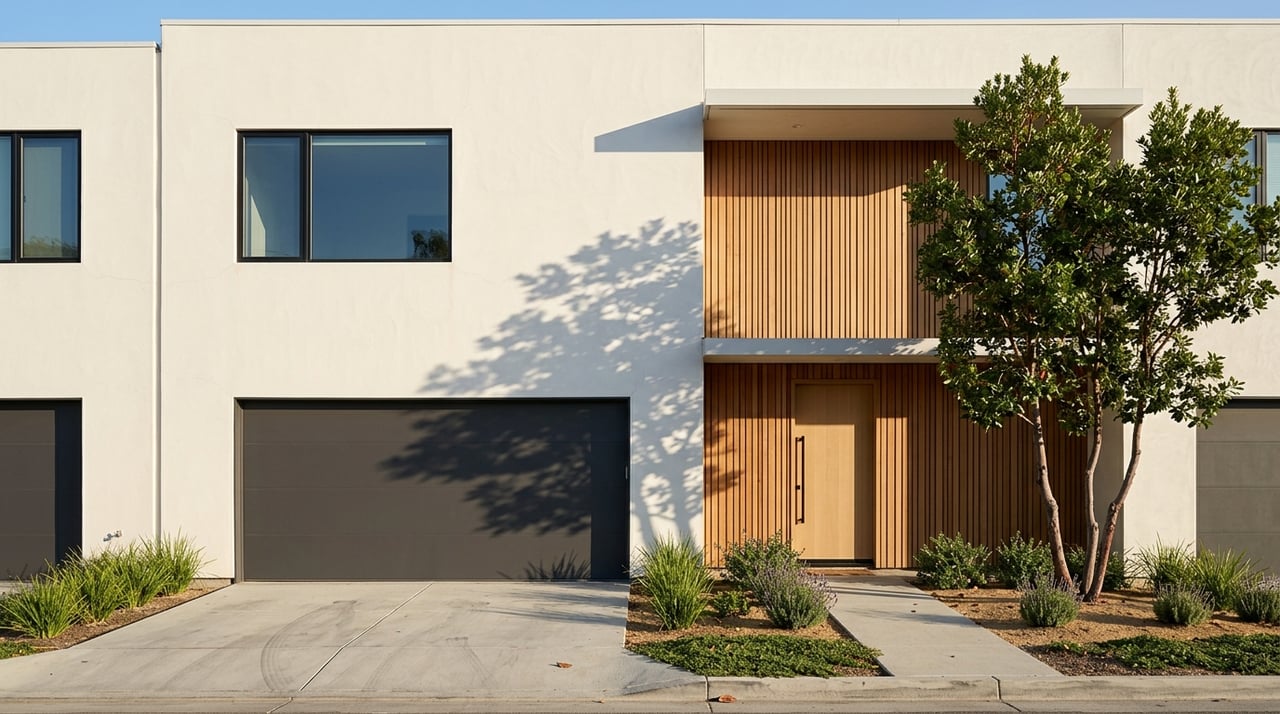
Modern minimalism has a real place in Palo Alto. The city does not require a single architectural style for all new homes, and contemporary design can work in established neighborhoods when it is handled carefully.
In Professorville, city guidance says no one style is mandated for new construction. Contemporary architecture can be successful when it blends with existing forms and massing, following a principle of compatibility with differentiation.
In Palo Alto’s single-family review framework for R-1 areas, the focus is generally on scale, privacy, massing, and streetscape, especially for new two-story homes and upper-story additions. That means the question is often less about whether a home looks traditional or modern, and more about whether it fits its site and surroundings.
Why newer homes appeal
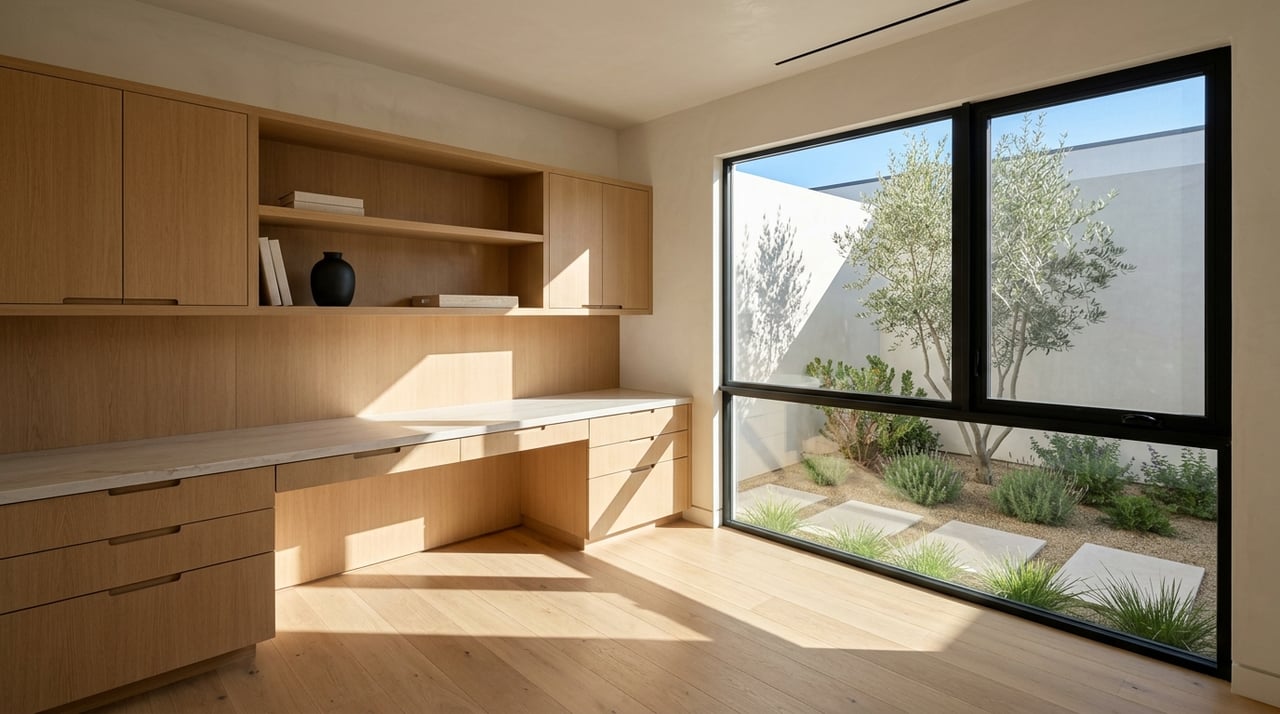
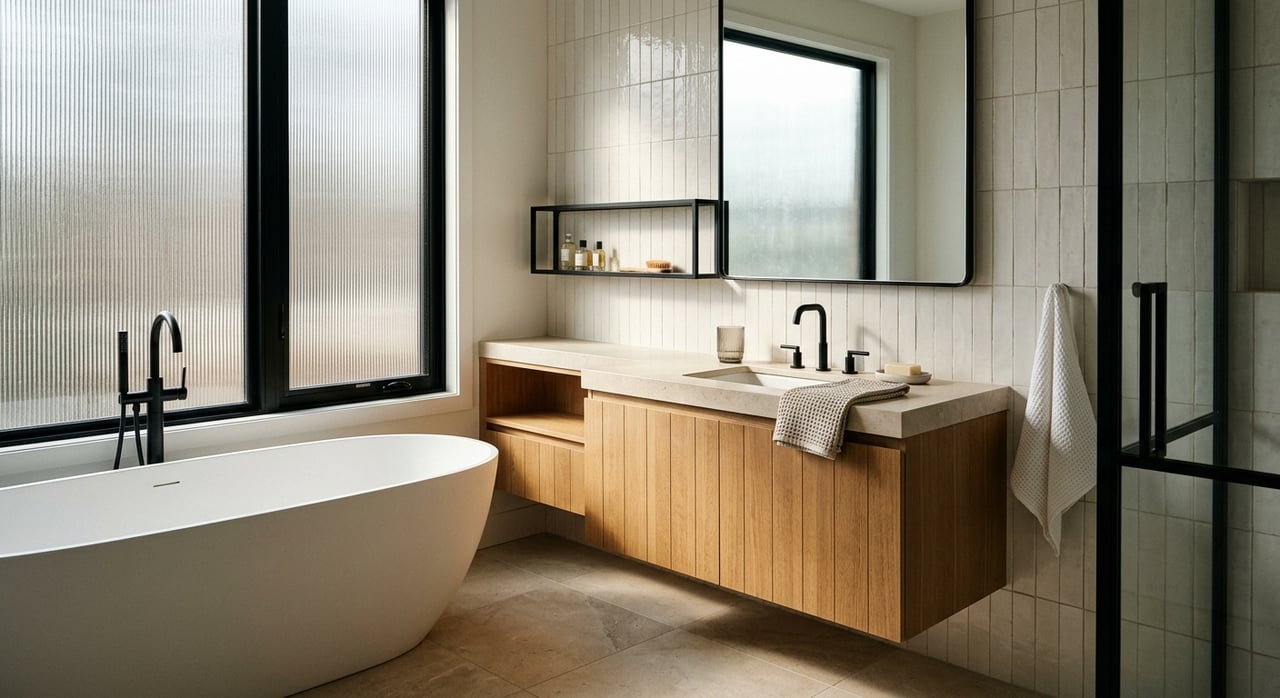
For many buyers, newer construction offers a simpler day-to-day ownership experience. Systems are typically newer, layouts often reflect current living patterns, and there is usually less immediate retrofit work after closing.
Newer homes also start from a stronger energy baseline. California’s 2025 Energy Code applies to permits submitted on or after January 1, 2026, and covers new buildings along with additions and alterations. The code encourages heat pumps, electric-readiness, and stronger ventilation.
That does not mean every new home is identical or that every older home is inefficient. It does mean newer construction often arrives closer to current expectations for performance and comfort.
Design fit matters more than old or new
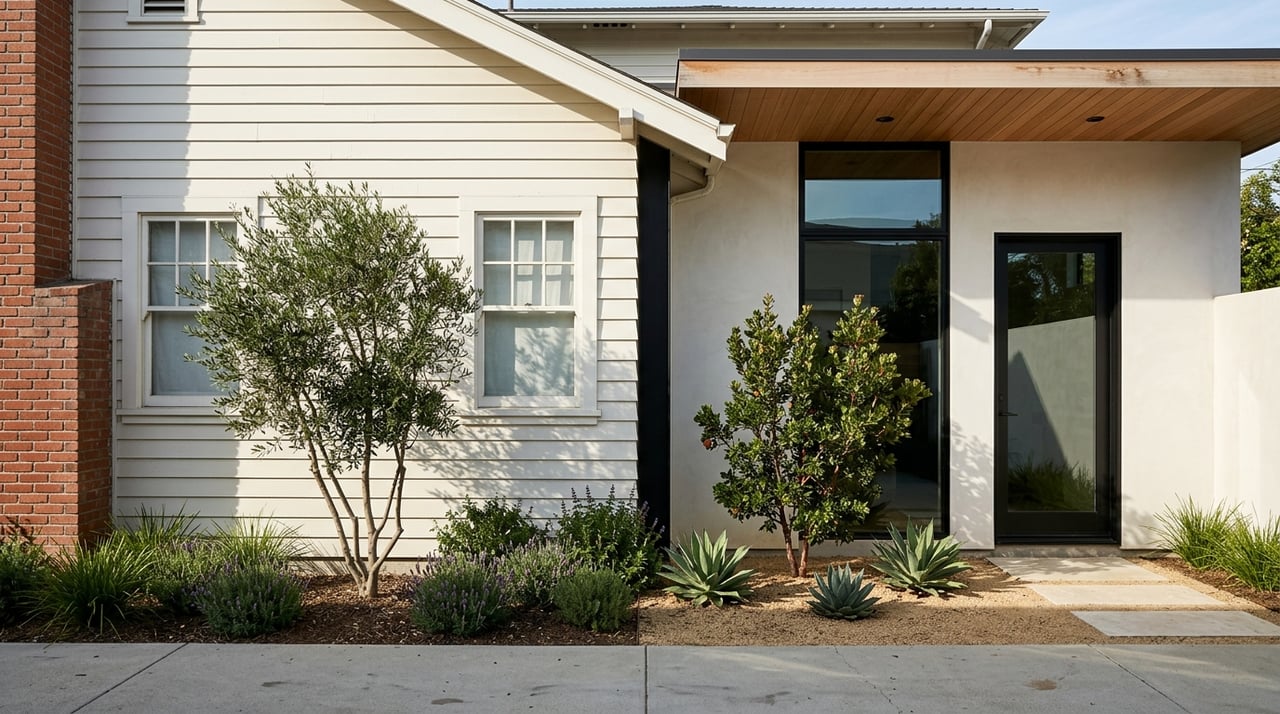
One of the most useful ways to think about Palo Alto architecture is this: fit matters more than labels. A contemporary house can work well in an older area, and a historic or midcentury home can feel highly livable today if it has been updated thoughtfully.
Palo Alto’s own guidance supports that view. In Eichler neighborhoods, a modern or contemporary vocabulary is often favored over revivalist styles, while Professorville guidance says contemporary architecture can succeed when it respects older forms and materials.
In practice, that often comes down to a few key elements:
- Roofline
- Massing
- Material palette
- Window proportions
- Relationship to the street
When those pieces are handled well, a home can feel appropriate and refined whether it reads as historic, midcentury, or newly contemporary.
Renovation flexibility in Palo Alto
If you are choosing between historic charm and modern minimalism, renovation flexibility may be one of your biggest decision points. In Palo Alto, that flexibility depends heavily on age, designation, and project scope.
The city says that if a property has not yet been evaluated or designated, it still may require a Historic Resource Evaluation when a discretionary project proposes demolition, new construction, an addition, or substantial exterior alterations and the home is more than 45 years old.
At the same time, routine maintenance or repair, interior work, and landscaping for historic resources typically do not require historic review. That distinction is important because it separates normal upkeep from more visible changes that may affect a property’s historic character.
A practical way to think about upgrades
Palo Alto’s Eichler guidance offers a useful model for older homes in general. It notes that homeowners may replace single-pane windows with insulated windows if the new units fit the original openings and preserve the home’s profile.
That idea can help you frame renovation decisions more clearly. Preserve the defining character where it matters most, and upgrade the systems and components that improve comfort, efficiency, and long-term ownership cost.
For many buyers and sellers, that balance creates the best result. You do not always need to choose between authenticity and livability.
How to choose the right fit
If you are deciding between a charming older home and a modern minimalist one in Palo Alto, it helps to focus on your lifestyle rather than style alone.
Historic charm may suit you if
- You value original details and architectural character
- You are comfortable with ongoing maintenance
- You may enjoy thoughtful preservation and selective upgrades
- You see yourself as a long-term steward of the property
Modern minimalism may suit you if
- You want a move-in-ready feel with fewer immediate projects
- You prefer cleaner lines and more contemporary layouts
- You want a home that may align more closely with current building standards
- You value lower upfront retrofit demands
Questions to ask yourself
Before you decide, consider these practical questions:
- How much renovation oversight do you want after closing?
- Are you open to preserving exterior character while updating systems?
- Do you want a home that feels turnkey now, or one you can shape over time?
- Is your budget prepared for maintenance surprises and contingency planning?
In Palo Alto, the best answer is rarely just “old” or “new.” It is the home whose design, condition, and ownership demands best match the way you want to live.
Why this choice matters for buyers and sellers
For buyers, this choice affects your comfort, budget, and future project list. A historic or midcentury home may offer more personality, while a newer home may offer a more predictable ownership experience.
For sellers, understanding that difference can shape how your home is positioned in the market. A well-preserved older home may benefit from thoughtful presentation around character and stewardship, while a contemporary home may stand out through design clarity, functionality, and energy-conscious features.
In either case, the strongest strategy starts with understanding what the home is, what it needs, and how Palo Alto’s local review framework may affect future plans. That is where clear guidance can make the process much easier.
Whether you are buying a design-forward modern home or preparing a character property for sale, a smart plan can help you protect value and reduce surprises. If you want strategic guidance on Palo Alto homes, renovations, or positioning a property for today’s market, connect with Mariana Pappalardo.
FAQs
Is every older home in Palo Alto considered historic?
- No. Palo Alto’s historic inventory is selective, not citywide, and it originally included about 500 properties concentrated in the older core and nearby areas.
Can a modern home fit in an older Palo Alto neighborhood?
- Yes. Palo Alto guidance says contemporary architecture can work when it is compatible in scale, massing, and materials with its surroundings.
Are older Palo Alto homes harder to maintain?
- Often, yes. City guidance notes that many older homes, including Eichlers, may have aging systems, limited insulation, single-pane glass, or roof and foundation issues that require ongoing maintenance.
Do exterior renovations on older Palo Alto homes trigger review?
- They can. Palo Alto says substantial exterior alterations, additions, new construction, or demolition involving homes more than 45 years old may require a Historic Resource Evaluation, depending on the property and project.
Are newer Palo Alto homes usually more energy efficient?
- In general, yes. Newer construction starts closer to current code requirements, and California’s updated energy code encourages stronger ventilation, heat pumps, and electric-readiness.
Which is better in Palo Alto: historic charm or modern minimalism?
- Neither is automatically better. Historic homes often offer more character and stewardship demands, while newer homes often offer more predictable systems and easier code alignment. The right choice depends on your goals, budget, and renovation appetite.